How to Get a Visa for Vietnam for US Citizens
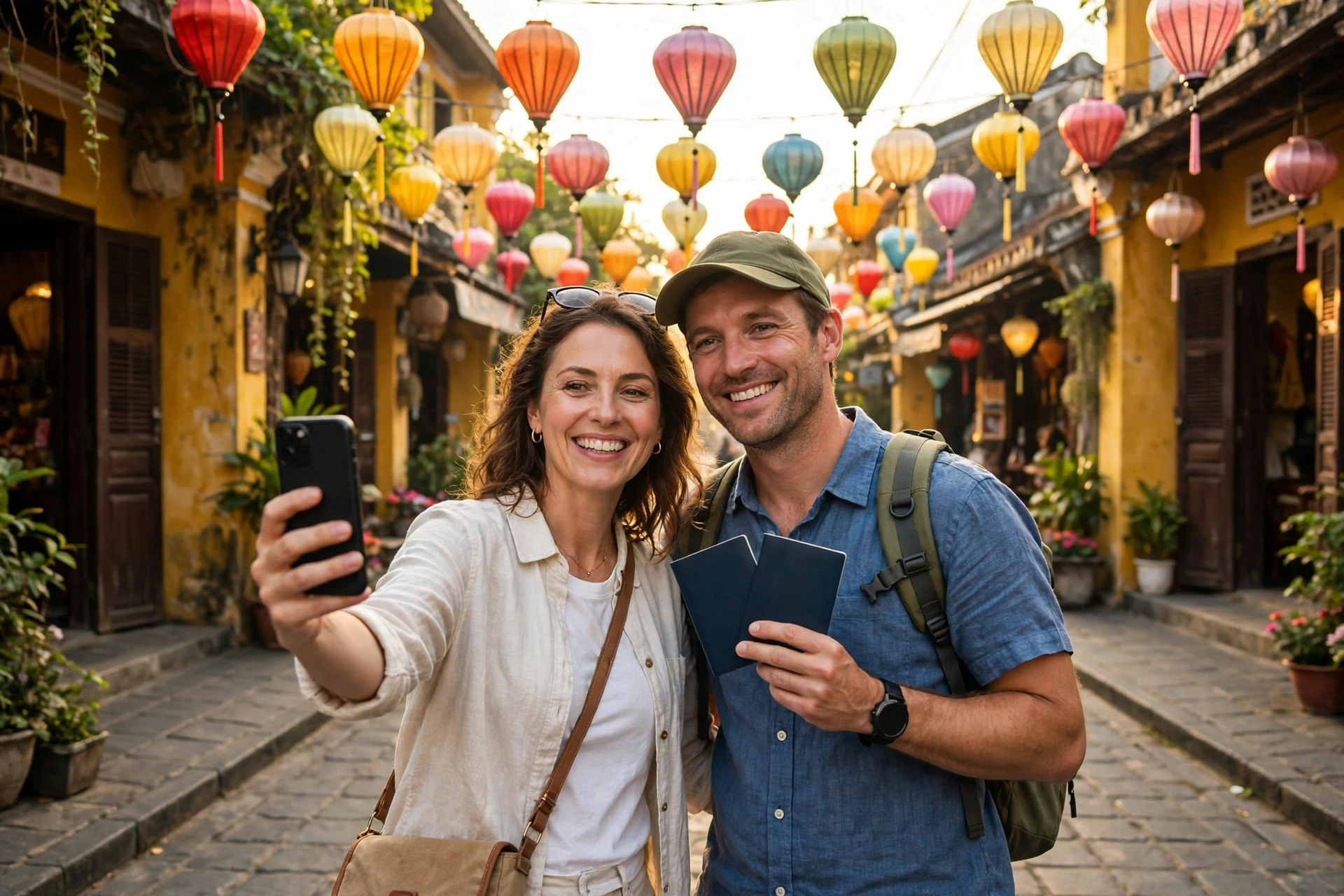
The direct answer: yes, US citizens need a visa for Vietnam, and for almost every trip the right one is the e-visa. You apply online, before you fly, on the Vietnamese government's official portal — evisa.gov.vn — and nowhere else. The e-visa is valid for up to 90 days, comes in single-entry (US$25) and multiple-entry (US$50) versions, and is normally issued in about 3 working days. There is no visa exemption for American passports — the one exception is the island of Phu Quoc, where stays of 30 days or less are visa-free. Everything else in this post is how to get the e-visa right the first time.
The Vietnam e-visa at a glance
- Who can apply: citizens of all countries, including the United States — the e-visa has been open to every nationality since August 15, 2023, and you apply from outside Vietnam.
- Validity: up to 90 days, starting from the entry date you request. Vietnam grants the period you ask for, so set your dates with a small buffer.
- Entries: single or multiple — you choose when you apply, and you cannot change it afterward.
- Government fee: US$25 single entry, US$50 multiple entry, paid by card on the portal. It is non-refundable, even if the application is refused.
- Processing: the portal's standard is about 3 working days after a complete application and payment; the US Department of State says to expect 3 to 5 working days, longer around Vietnamese holidays. Apply at least two weeks before you fly.
- Where you can enter: only through the designated international border gates on the official list — international airports, land crossings and seaports (the list covers 83 checkpoints). The entry and exit ports printed on your e-visa must match the ones you actually use.
What you need before you start
- A passport valid for at least 6 months beyond your arrival date, with blank pages for stamps (the State Department advises at least 2 blank pages). Note: Vietnam may not accept the 12-page US emergency passport for e-visa entry.
- A clear scan of your passport data page — full page, all details readable.
- A recent passport-style digital photo meeting the portal's requirements.
- Your travel plan: entry date, the exact entry and exit checkpoints you will use, and your first address in Vietnam.
- A payment card the portal accepts, for the government fee.
How to apply, step by step
- Go to the official portal: evisa.gov.vn (the same system also answers at thithucdientu.gov.vn). Check the address bar — the real government site ends in .gov.vn. Do not start from a sponsored search ad.
- Choose the e-visa application for foreigners applying from outside Vietnam and read the portal's instructions and checkpoint list. Confirm your entry and exit points accept e-visa holders.
- Upload your photo and passport data page, in the sizes and format the portal specifies.
- Fill in the form exactly as your passport reads — full name in the same order, passport number, dates. Choose single or multiple entry, your validity period (up to 90 days), and your entry and exit ports. If your trip includes a side trip to Cambodia, Laos or Thailand and back, choose multiple entry now — a single-entry e-visa ends the moment you leave Vietnam.
- Pay the government fee — US$25 or US$50 — through the portal, and save the registration code it gives you. Screenshot it and email it to yourself; the code is how you check your result.
- Check the portal for your result after the processing window, using your registration code. Download the approved e-visa and print it on paper — you must carry the printed e-visa with your passport when you travel.
- Before you fly: if you are entering by air on a non-Vietnamese passport, complete the pre-arrival declaration form no earlier than 3 days before arrival, as the State Department's Vietnam page directs.
- At the border, present the printed e-visa and the same passport you applied with — you must enter and exit Vietnam on that same passport. Check your entry stamp before you leave the desk.
Our full step-by-step guide walks the same process with the document checklist in one place: 👉 Vietnam eVisa from the United States: How to Apply, Step by Step
The real cost
On the official portal, the whole government cost is the fee itself: US$25 or US$50, once, non-refundable. There is no official express fee and no official agent fee. That gives you a simple test: if a website asks for anything more than $25 or $50 for the e-visa itself, you are not on the government portal — you are on a commercial look-alike that will file the same application and pocket the difference, sometimes two or three times the real fee. Some of those sites are worse than expensive: Vietnamese authorities have repeatedly warned that fake "express visa" and "guaranteed visa" pages steal passport and card details. The US Department of State's advice is the same as ours: only use the official Government of Vietnam website for your e-visa.
Common mistakes that cost travelers their trip
- Applying on a look-alike site. The fee test above catches most of them: real fee $25/$50, real domain ending .gov.vn.
- A name or passport number that doesn't match the passport exactly. The State Department warns that if your e-visa has an error, immigration may refuse you entry — and the embassy cannot fix e-visa information for you. Check every character before you pay, and check the issued e-visa again the moment it arrives.
- Choosing the wrong entry port. Your e-visa names your entry and exit checkpoints. Arriving at a different airport or land crossing than the one on the visa can mean being turned away.
- Picking single entry for a multi-country itinerary. One exit from Vietnam ends a single-entry e-visa. Side trips need multiple entry.
- Applying at the last minute. Three working days is the standard, not a promise — holidays and corrections eat time. Two weeks ahead is the safe habit.
- Planning to "just extend it there." An e-visa cannot be renewed or extended inside Vietnam, and overstaying brings fines and delays getting permission to leave. If you need longer, plan the dates before you apply.
Frequently asked questions
Do US citizens need a visa for Vietnam? Yes. The US Department of State is explicit: a visa is required, and you must apply before you travel. The only exception is Phu Quoc island, for stays of 30 days or less.
How long can I stay in Vietnam on an e-visa? Up to 90 days, within the validity dates printed on your e-visa. You choose the period when you apply — ask for the dates you actually need, with a buffer.
How much is the Vietnam e-visa for Americans? US$25 for single entry, US$50 for multiple entry — the government fee on the official portal, confirmed in the fee schedule in force since April 1, 2026 (Ministry of Finance Circular 28/2026/TT-BTC). It is not refunded if the application is refused.
How long does the Vietnam e-visa take? About 3 working days is the portal's standard after a complete application and payment; the US Department of State says e-visas are usually processed within 3 to 5 working days. Apply at least two weeks before departure.
Can I get a visa on arrival instead? The e-visa has replaced the old arrival-letter routine for ordinary trips — apply online in advance and arrive with the printed e-visa. It is simpler, cheaper, and the route both the Vietnamese Immigration Department and the US State Department point travelers to.
Does each member of my family need one? Yes. Every traveler — children included — needs their own e-visa in their own passport, applied for separately on the portal.
What if I spot an error on my issued e-visa? Do not travel on it and hope. An e-visa that doesn't match your passport can mean refused entry. Apply again on the official portal with the correct details, paying the fee again — which is why the careful check before the first payment matters.
Travel easy — and get the details checked before you pay
The e-visa is genuinely simple when the details are right, and genuinely unforgiving when one character is wrong: the fee is gone and the trip is at risk. If you want a professional eye on your application before you submit — form, photo, passport scan, ports and dates all checked against your real itinerary — that is exactly what VisaSûr does. See the services at getvisasur.com, and keep the full Vietnam guide open while you apply: 👉 Vietnam eVisa guides for US travelers
VisaSûr is a private preparation service, not a government website and not affiliated with any embassy. Visa rules and fees change — always confirm the current requirements on the official Vietnam e-visa portal, evisa.gov.vn, and on travel.state.gov before you apply.
Facts & sources (checked Nov 27, 2026):
- US Department of State, Vietnam Travel Advisory / Travel Guidance page (travel.state.gov, read directly Nov 27, 2026): visa required before travel; Phu Quoc ≤30-day exception; passport 6 months beyond arrival, blank pages, 12-page emergency passport warning; e-visa processing usually 3–5 working days; print the e-visa; entry/exit port must match the application; no in-country e-visa extension; enter/exit on the same passport; pre-arrival declaration for air arrivals within 3 days; "only use the official Government of Vietnam website… avoid scams and fake fees."
- Vietnam Immigration Department (Ministry of Public Security), official e-visa portal evisa.gov.vn / thithucdientu.gov.vn, as published in the portal's own terms and restated in Vietnam's government fee schedule: open to all nationalities since Aug 15, 2023 (Law 23/2023/QH15); validity up to 90 days; single or multiple entry; fee US$25 / US$50, non-refundable (Circular 28/2026/TT-BTC, in force Apr 1, 2026); standard processing ~3 working days; entry/exit only at designated international border gates (83 checkpoints per Government Resolution 389/NQ-CP, Dec 2025). Note: evisa.gov.vn itself could not be fetched directly during drafting (connection error); portal terms above are as published by the Immigration Department and confirmed against the State Department page and the fee circular — re-check the portal live on publish day per the BLOG-PLAN checklist.
Keep reading
You waited months for the appointment. You travelled to Abuja or Lagos, queued at the gate, answered a handful of questions at the window — and the officer
The direct answer: the US government fee for a B1/B2 visitor visa is US$185. That is the official application fee set by the US Department of State (travel
La réponse directe d'abord : un refus 214(b) n'est ni une interdiction ni une décision définitive sur votre personne. Il signifie que, lors de cet entretie